

The Precision Craftsmanship Behind American Garage Door Torsion Springs
The Precision Craftsmanship Behind American Garage Door Torsion Springs
In the heart of America’s manufacturing landscape, garage door torsion springs are engineered with a blend of metallurgical science and precision automation. These critical components endure tens of thousands of cycles, making their production process as demanding as their daily operation.
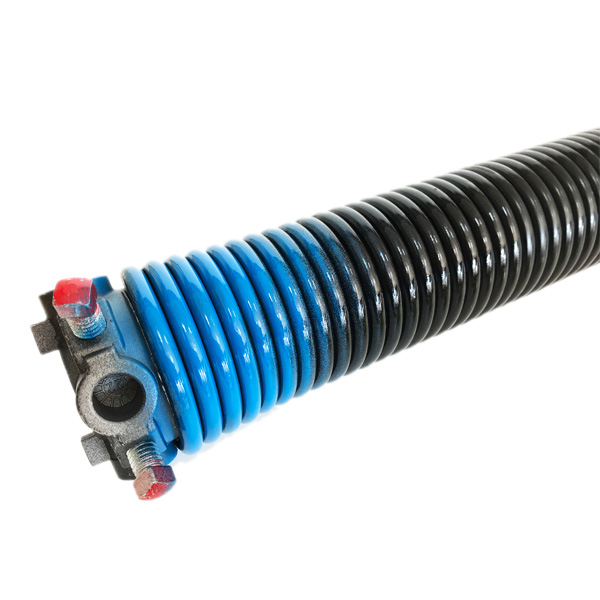
1: Material Selection
Every spring begins with high-grade oil-tempered chrome-silicon or chrome-vanadium steel wire. This alloy is chosen for its exceptional tensile strength, fatigue resistance, and ability to return to shape after extreme deflection. Coils are fed from massive spools into straightening machines that ensure perfect linearity before winding.
2: Precision Coiling
Using CNC (Computer Numerical Control) mandrel winders, the wire is tightly wrapped around a hardened arbor at controlled speeds and tensions. The machine’s software calculates exact pitch, inner diameter, and active coil count based on door weight and lift requirements. For added safety, the winding process creates a tight, consistent helix—any microscopic deviation is rejected by laser measurement systems.
3: Heat Treatment & Stress Relief
Freshly coiled springs undergo controlled furnace tempering at 400–600°F. This relieves residual stress from cold-working and transforms the steel’s microstructure to improve elasticity. Precision soaking times ensure uniform hardness across every coil, preventing weak points that could cause premature failure.
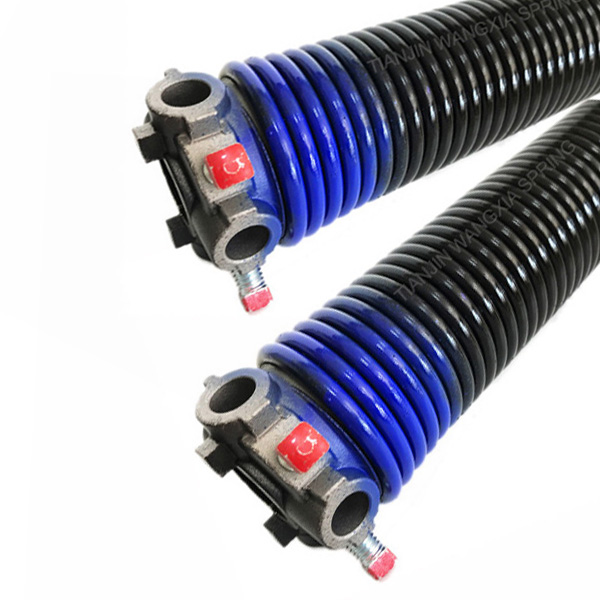
4: Shot Peening
To combat metal fatigue, each spring passes through a shot-peening chamber. High-velocity steel pellets bombard the wire surface, creating compressive residual stresses that inhibit crack initiation. This critical step can extend spring life by up to 300%.
5: End Grinding & Torsioning
The spring ends are precision-ground to a flat, perpendicular surface, ensuring seamless seating on the winding cone and stationary cone. Finally, each unit is pre-torsioned (wound to a calculated fraction of its maximum capacity) to set the memory and eliminate initial relaxation, guaranteeing consistent torque delivery from the first cycle.
Quality Assurance
Every batch undergoes cycle testing on dynamic rigs, simulating 10,000+ open-close operations. Only springs that maintain 98% of their original torque pass final inspection. This meticulous workflow—combining American steel standards with robotic precision—delivers the reliability that homeowners and professionals trust with every garage door lift.
Post time: Jun-17-2026